
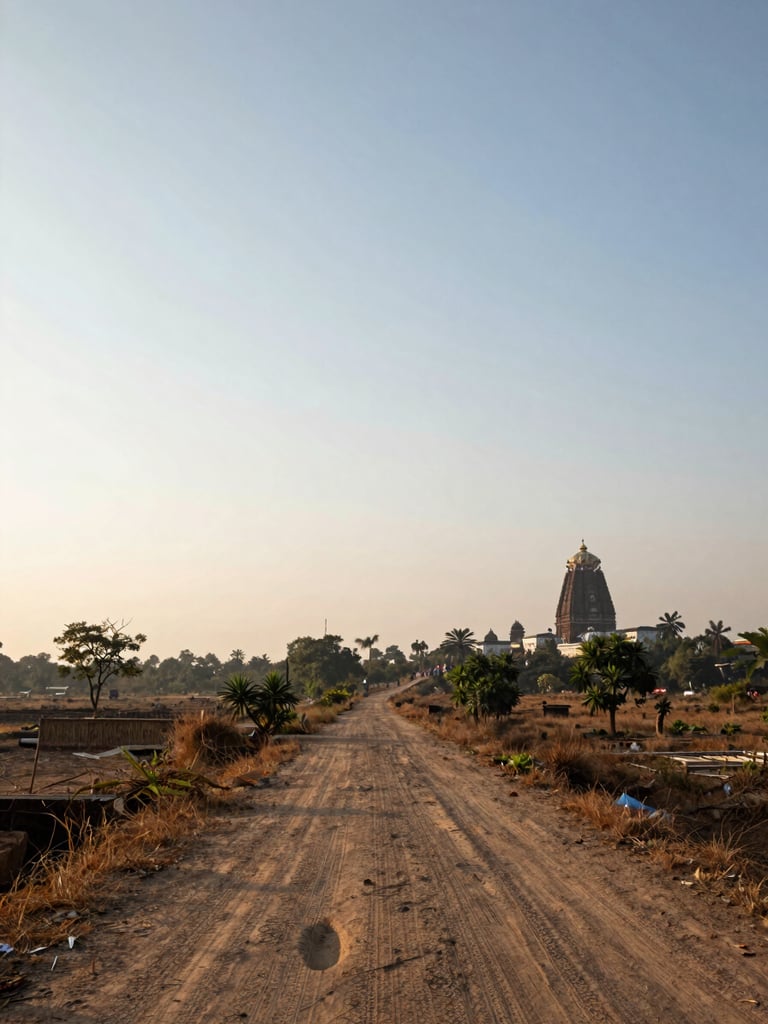
A sacred hill corridor, cleared route by route.
Encroachment and waste accumulation had narrowed Govardhan's parikrama path for decades. Field teams now operate on a documented zone-by-zone clearing schedule, with goshala operations running in parallel.
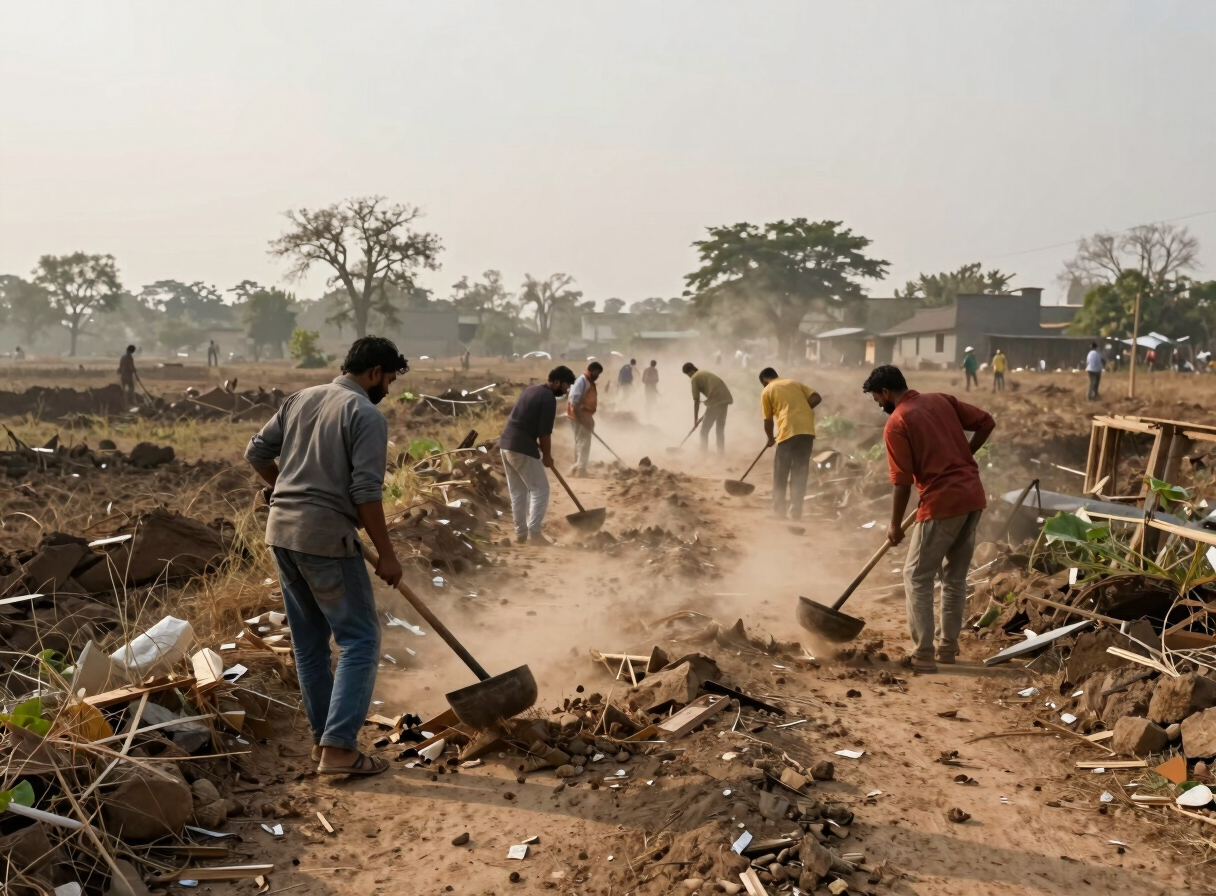
Mapped, cleared, and maintained.
Each section of the 21-km corridor is assigned a documented clearing cycle. Encroachments are catalogued, waste is removed in scheduled sweeps, and route markers are reinstalled to guide pilgrims safely.
14 km
3.2 lakh litres
6 active zones
Walkable route restored to documented clearance standard across active restoration zones.
Wastewater diverted from the parikrama path through channel rerouting and drainage interventions.
Concurrent clearing operations across distinct corridor segments, each on a scheduled maintenance cycle.
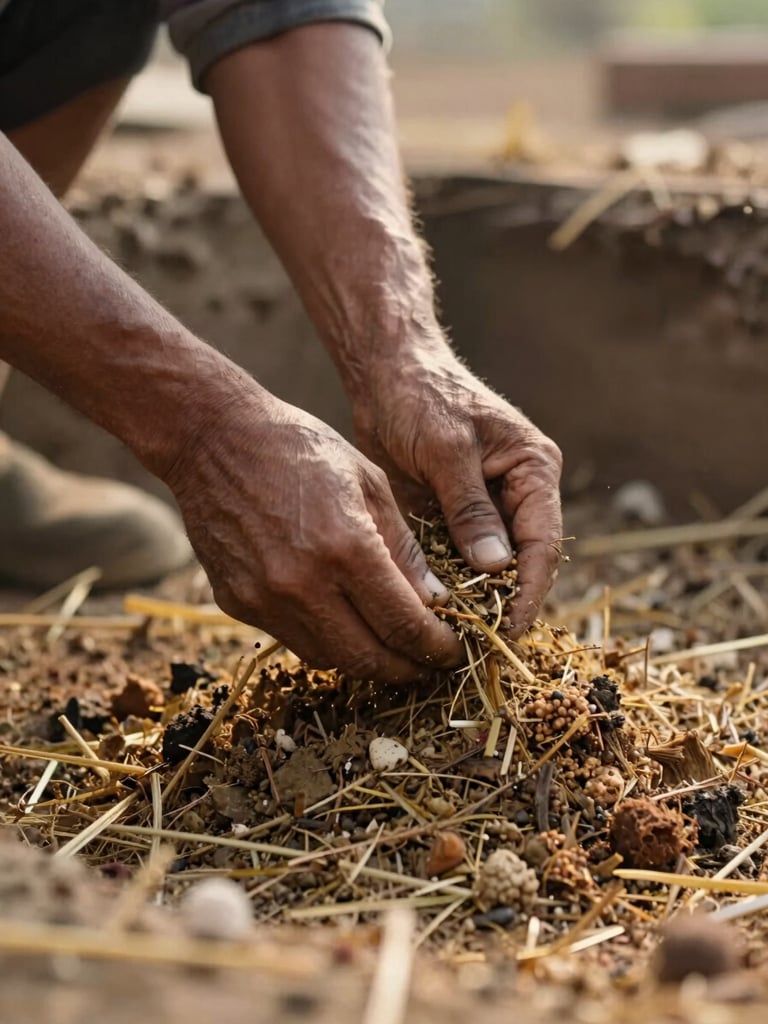
Animal care, organic yield, route upkeep—one operation.
Goshala waste is composted on-site, supplying organic fertiliser to fields that feed pilgrims and local families. The same workers maintain the parikrama path. There is no separation between these functions.
This integrated model means every rupee directed to the goshala simultaneously supports animal welfare, agricultural yield, and parikrama stewardship.